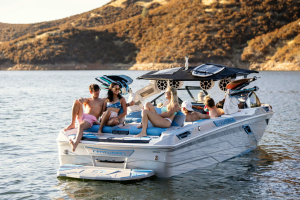
This is Day Six of National Safe Boating Week here in the USA, when the National Safe Boating Council highlights ways to stay safe on the water. Whether you're venturing out on the high seas or sticking close to shore, a few simple steps can help you get home in one safe piece.
Everything shipshape? Before you leave the dock, check over your boat to make sure everything is working properly. The US Coast Guard Auxiliary has a safety checklist you can print out and keep handy.
Wear it! As everyone should know, a boat is required by law to carry a personal flotation device for each passenger; PFD laws vary from state to state, many
When trying to sneak up on the fish in your favorite spot, your regular boat motor might be just too much. A well-chosen electric trolling motor can give you the edge needed to catch your limit with relative ease, but where to begin?
The power of trolling motors is expressed in pounds of thrust, not horsepower. How much thrust do you need? That depends on the length and weight of your boat. The chart below gives an idea of the minimum thrust requirements for boats of different sizes. You might want a more power than the minimum, of course.
[caption id="attachment_120" align="aligncenter" width="300"] Chart: fishing-tips-bait-tackle.com[/caption]
What about shaft length? We've seen recommendations in the neighborhood of 20 to 24 inches below your boat's waterline, so that's a good


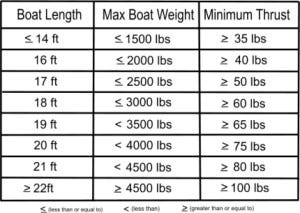 Chart: fishing-tips-bait-tackle.com[/caption]
What about shaft length? We've seen recommendations in the neighborhood of 20 to 24 inches below your boat's waterline, so that's a good
Chart: fishing-tips-bait-tackle.com[/caption]
What about shaft length? We've seen recommendations in the neighborhood of 20 to 24 inches below your boat's waterline, so that's a good